on a shoestring
Oxford. City of dreaming spires. Seat of learning. Home to the oldest university in the English-speaking world. Haunt of countless notable people, including Edmond Halley, C.S. Lewis, J. R. R. Tolkien, Lewis Carroll, and Inspector Morse. OK, I know the last one is a fictional character, but he is such a part of the rich tapestry that makes up this charming city that he deserves a mention.
There are many places to stay in Oxford to suit all budgets, but as we only live a couple of hours away, we opted to drive in for the day.

We parked at the Peartree Park & Ride. We had passed the Redbridge and Seacourt sites on the way, because I wanted to come into Oxford via Woodstock Road, as, of the three, it’s the nicest way in. Parking for 16 hours, plus two adult bus fares, cost us £5 at the machine, I paid by card. Children are free as long as the adults have tickets. Bargain. We found seats (top deck at the front for the best view of course) and made ourselves comfortable. There are USB points on the bus, but some were broken.
As the bus trundled along Woodstock Road, I pointed out things of note. St Edward’s School, educator of Sir Douglas Bader, Kenneth Grahame, Emilia Clarke and Florence Pugh, amongst many others, then the Horse and Jockey pub, now a private dwelling but I was pleased to see the former usage noted on the building, the Radcliffe Infirmary fountain, and as we entered St Giles’, The Eagle and Child. Currently undergoing renovation, this famous hostelry will be reopening as a pub, but no opening date has been announced at the time of writing. Here, ‘The Inklings’ used to meet, a literary society that counted the aforementioned C.S.Lewis and J.R.R.Tolkien among its members. The ‘Bird and Baby’ as they called it, was the scene, if rumour is to be believed, of many a heated discussion. Where St Giles’ meets Magdalen Street (pronounced ‘maudlin’) and Beaumont Street, you’ll see the Martyrs’ Memorial. This was erected in 1843 to commemorate two bishops and a former archbishop who were burned at the stake for heresy in the 1550’s. Their crime? Protestant beliefs. The memorial is made up of a spire and steps, and is often the site of protests. There was one in full swing when we first passed, but I wasn’t able to make out what the signs said, or the jumbled chants, but it was very peaceful and not threatening at all, and had dispersed the next time we passed.

As it was founded in the 8th Century, and granted City status in 1542, Oxford holds a lot of history. Within the city centre, it seems as if every building has a blue plaque or a sign noting something of significance that happened there, including one marking the home of Sarah Cooper, who made the first Oxford Marmalade in 1874.
Starting in Bonn Square, home to Oxford’s oldest war memorial, constructed in 1900 to commemorate those lost in the Tirah campaign in India, we walked along Queen Street to the Carfax Tower, climbing the narrow spiral staircase (all 99 steps of it) to enjoy the view. It costs £4 for an adult, £3 for a child. If you’d rather do this for free, head over to the Westgate Shopping Centre and go up to the terrace. The view is pretty much the same, just a more zoomed out version, and you can go up via lift or escalator, making this an accessible option.

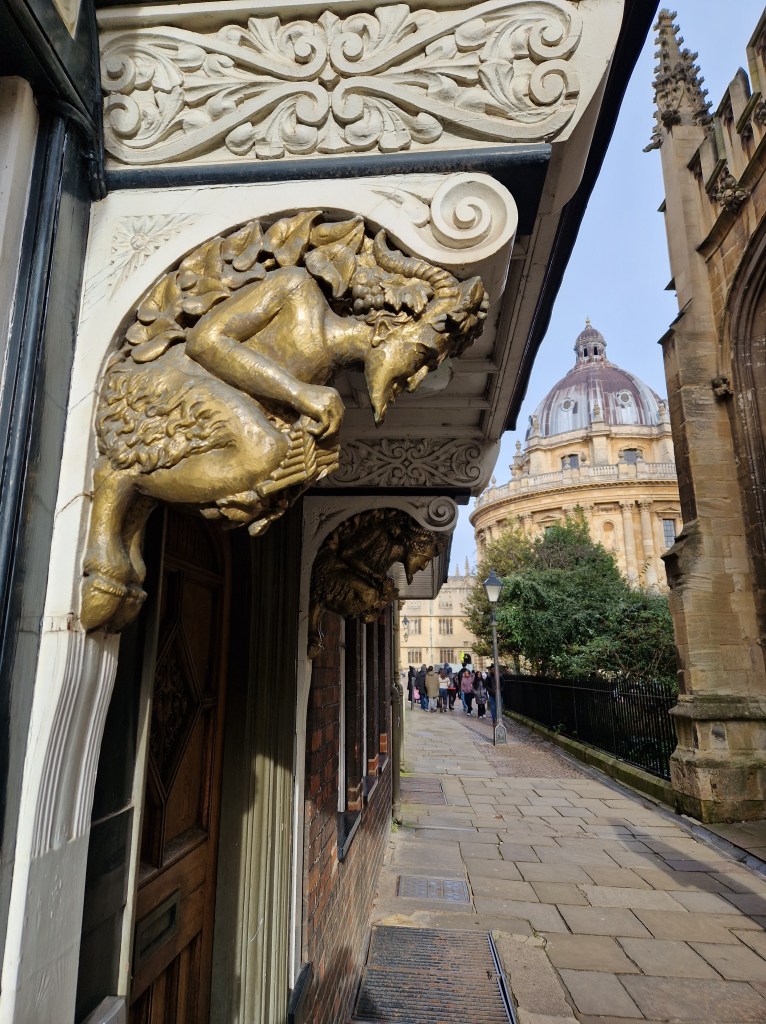
From the Carfax Tower, cross the road and walk along the High Street until you get to St. Mary’s Passage on the left. Take your time, and let anyone in front of you get ahead so you can see Mr Tumnus and his lamppost with nobody blocking the view.
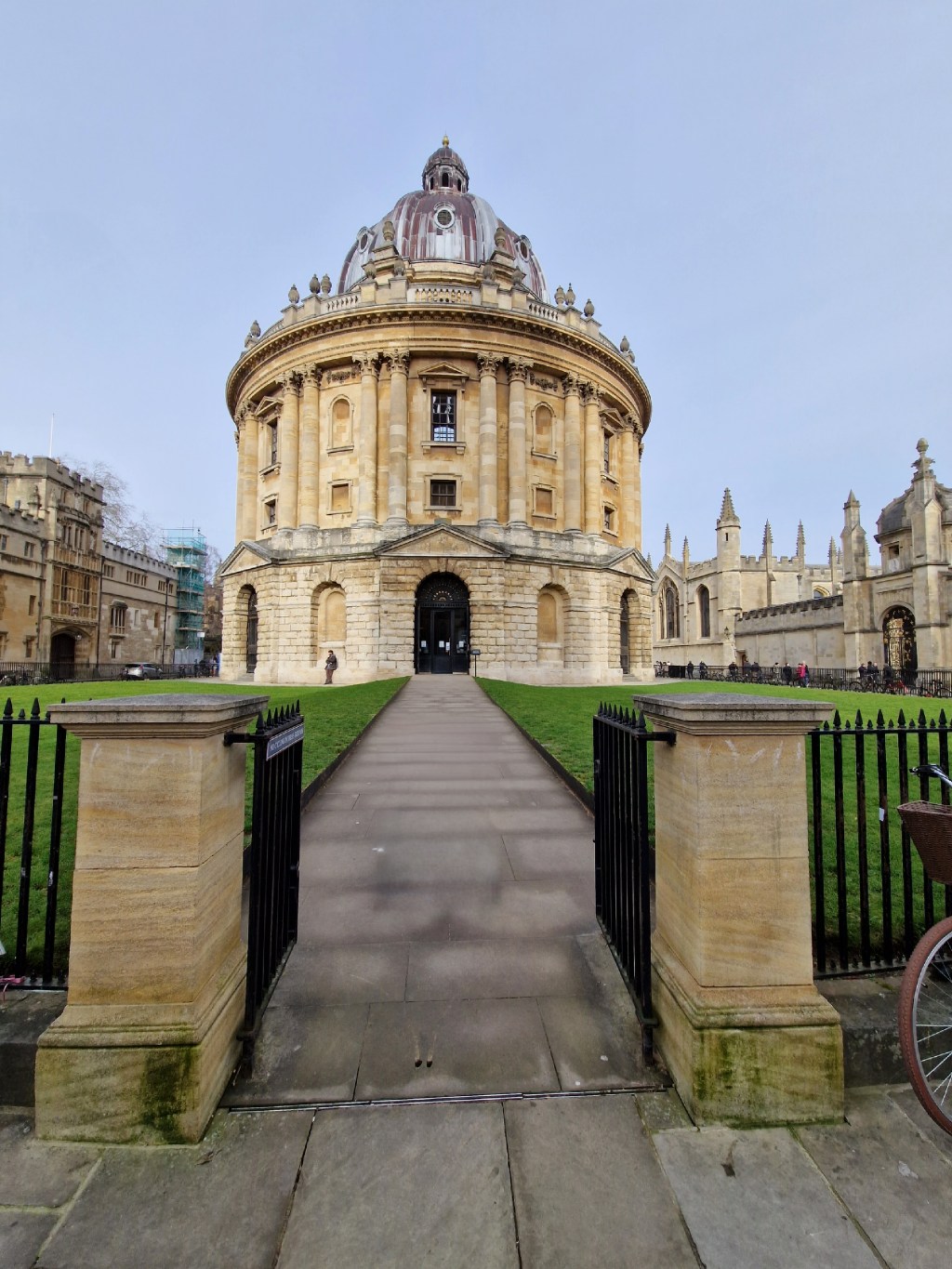
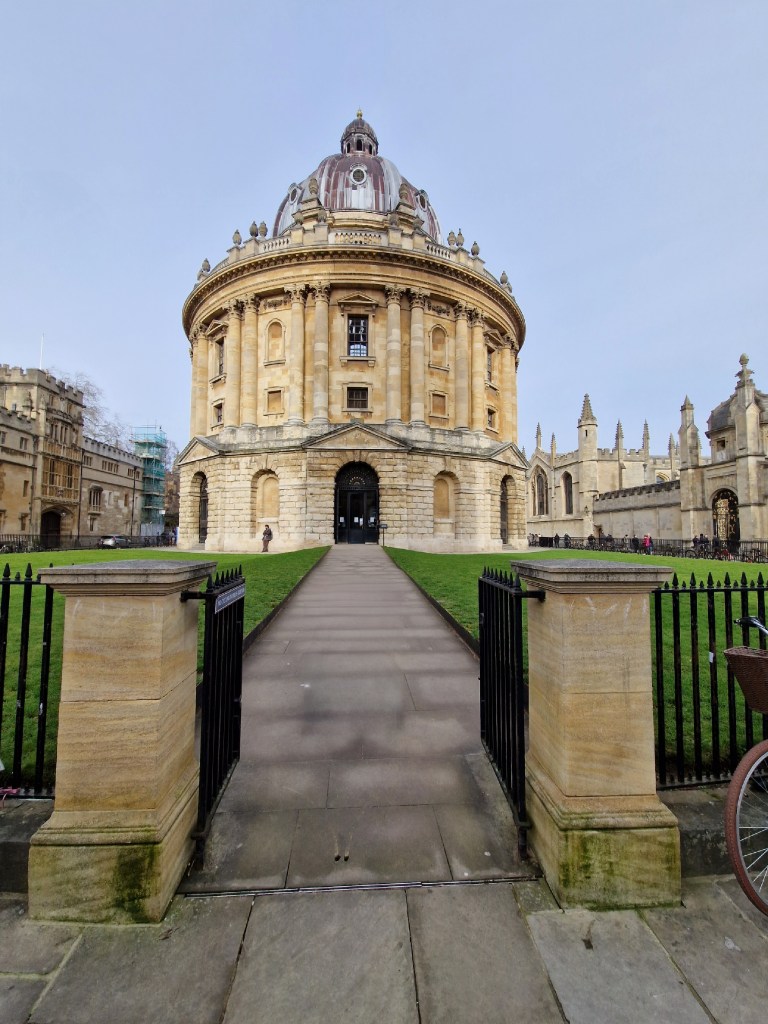
An unobstructed view of the Radcliffe Camera is almost impossible unless you’re there very early, but it’s one of the most photogenic buildings I’ve ever seen. The architecture, the warm cotswold stone, and the surroundings make it an iconic sight. As part of the Bodleian Library, the building isn’t open to the public, but you can book a tour. It is also a popular filming location, having featured regularly in Inspector Morse, and most recently in Wonka.
Nearby, on New College Lane, you will find the Bridge of Sighs, or to call it by its correct name, Hertford Bridge. Again, not open to the public, it connects two parts of Hertford College.
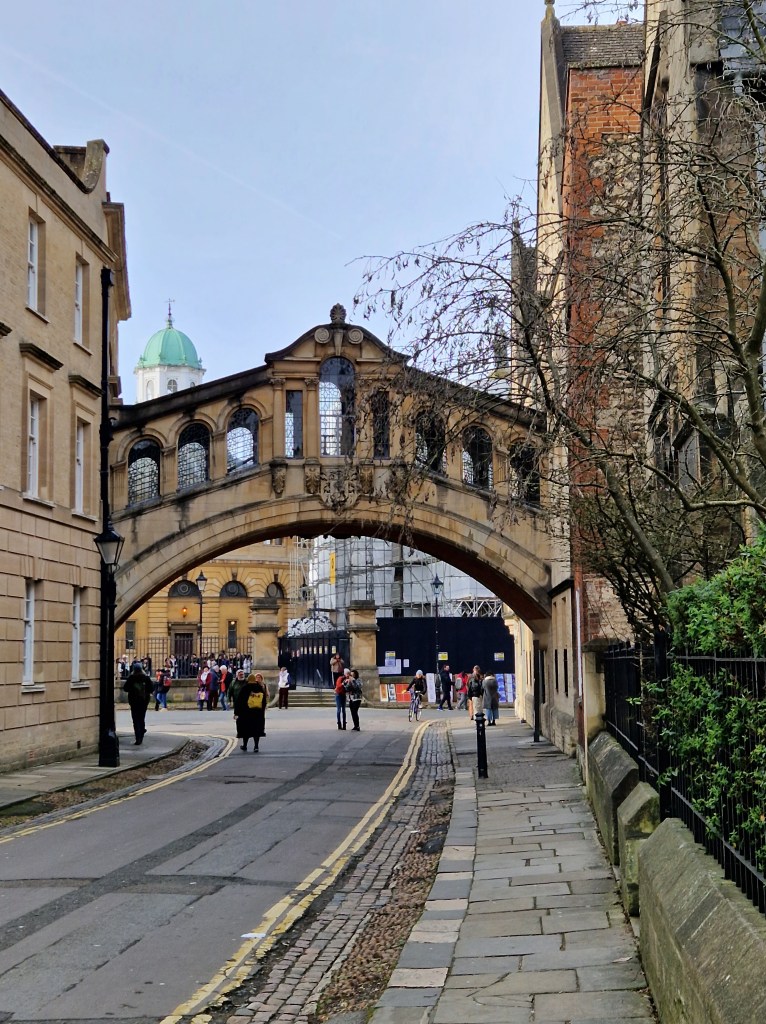
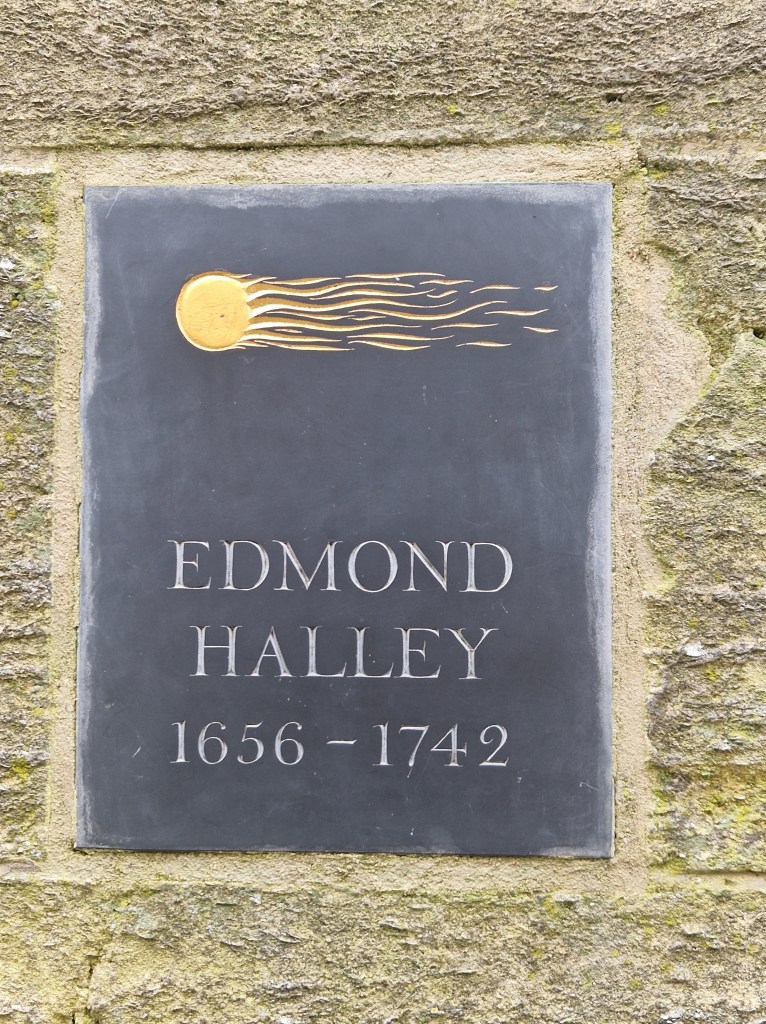
Don’t just look at it and walk on though, pass underneath it and take a look at the place where Edmond Halley lived during his time in Oxford. There is a plaque on the gatepost bearing a comet, and the rectangular structure on top of the house is believed to have been used as his observatory. Light pollution was less of an issue in his day!
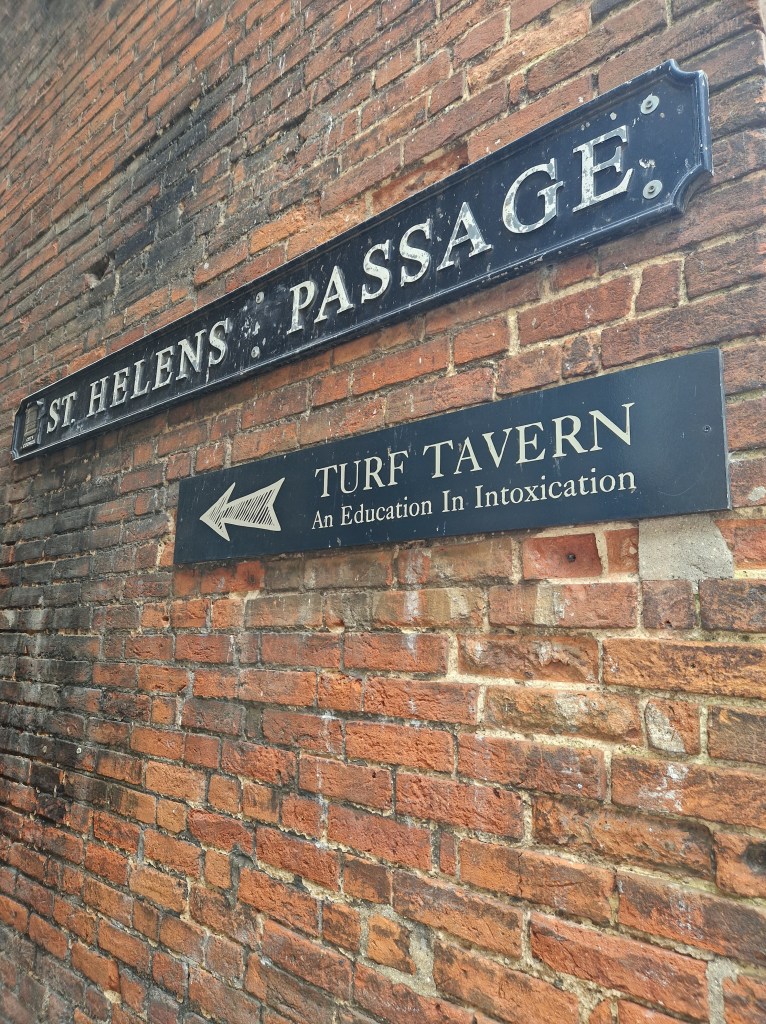
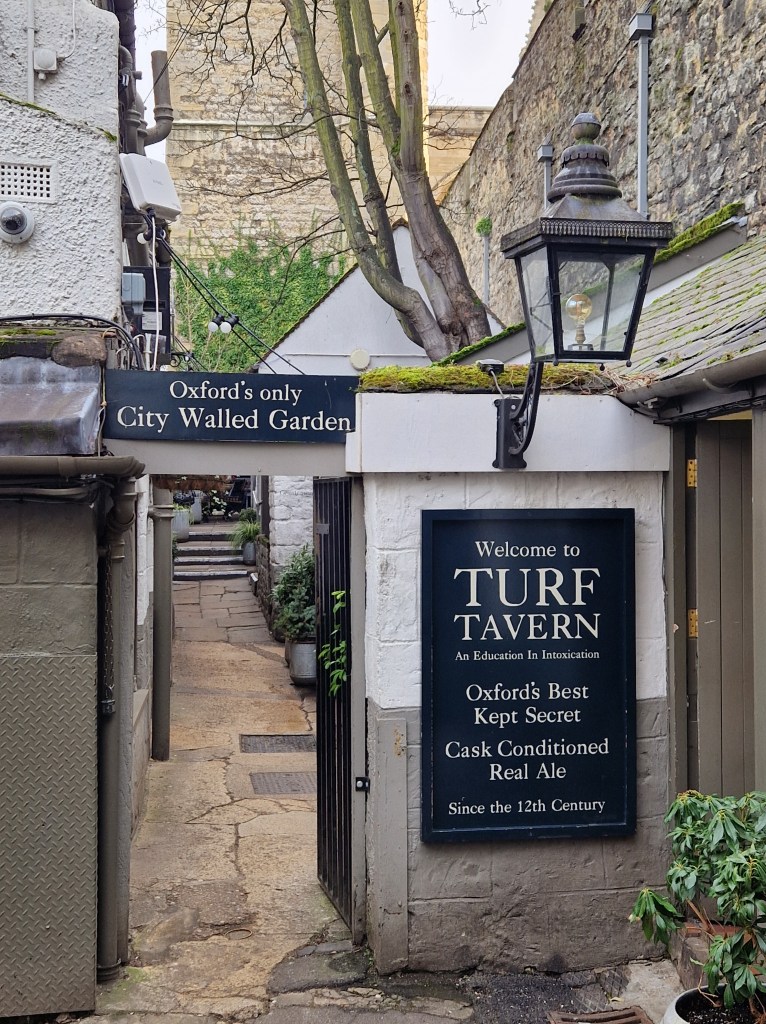
Nearby, down a narrow passage, is one of Oxford’s best kept secrets. Well it was before social media, anyway! A handy spot to enjoy a drink and a bite to eat, the Turf Tavern has been serving up ale since the 12th Century. I’m not going to tell you exactly where to find it, and I urge you to look around and find it for yourself rather than using a maps app, it’s much more rewarding to stumble across it unaided. I’ve given you plenty of hints!


Other things to see in this area are the Sheldonian Theatre, and Blackwell’s Bookshop.
Founded in the same year the lightbulb was created, 1879, Blackwell’s houses four floors of every kind of book you can imagine. Events are regularly held here, and tickets are generally very inexpensive. Every Sunday they hold a free children’s storytime at 11.30am in the children’s department. Tickets can be booked on the Blackwell’s website. I can’t visit Oxford without a wander around Blackwell’s, it’s an institution. The first bookcase ever installed in the shop is still there, marked by a plaque. Can you find it?
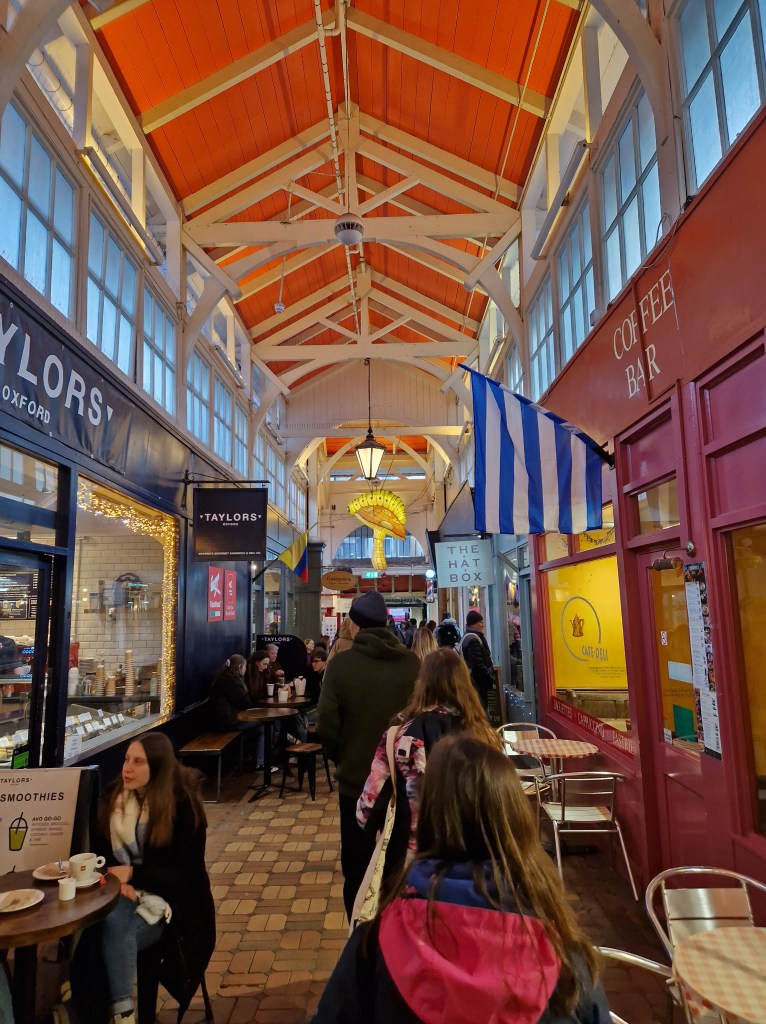
Pre-dating Blackwell’s by over 100 years, The Covered Market is Oxford’s version of the souk. A maze of winding passageways, it opened in 1774, and houses all kinds of delights. The cheese counter is a particular favourite, but it’s a great place to visit if you can’t decide what you want to eat, as tucked between clothes shops and florists, butchers and bakers, you’ll find an array of food places to choose from. There are events held here regularly too, so check their website to see if there’s anything on during your visit.
Museums
As you might expect from a place so academic in nature, Oxford has plenty of museums to choose from, many operated by or in conjunction with the University. On this occasion, we chose three that are close together, two of them under the same roof, one a short walk away.
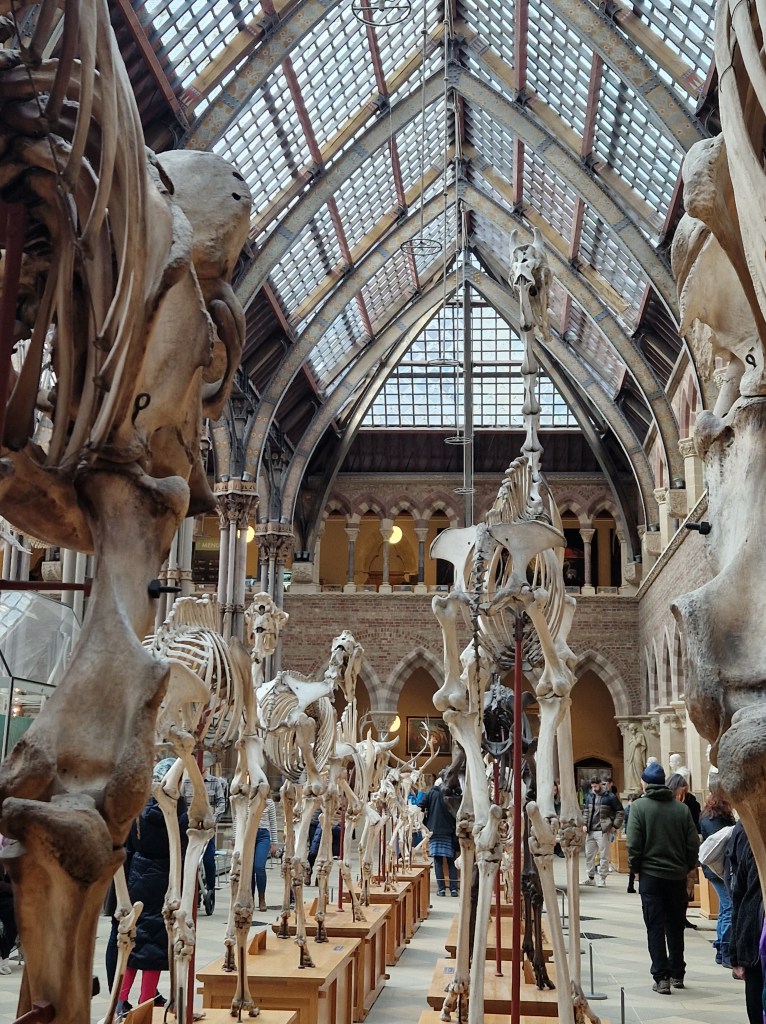
Oxford University Museum of Natural History
Open daily 10am-5pm, this is a must see. The building itself is a work of art, with a huge vaulted ceiling, and 127 polished stone columns separating the museum and galleries. Each is made from a different stone, sourced within the British Isles. In the main part of the museum you will find various skeletons, including those of dinosaurs, sea creatures and birds, and a multitude of other exhibits, including the only specimen of Dodo tissue in existence (this is currently undergoing restoration, so if it’s a vital part of your visit, call and check that it’s on display before you travel). This isn’t a stuffy, hands-off museum at all, there are many things you are encouraged to touch and interact with, including two stuffed bears. The thickness of their coats is beyond belief!
Pitt Rivers Museum
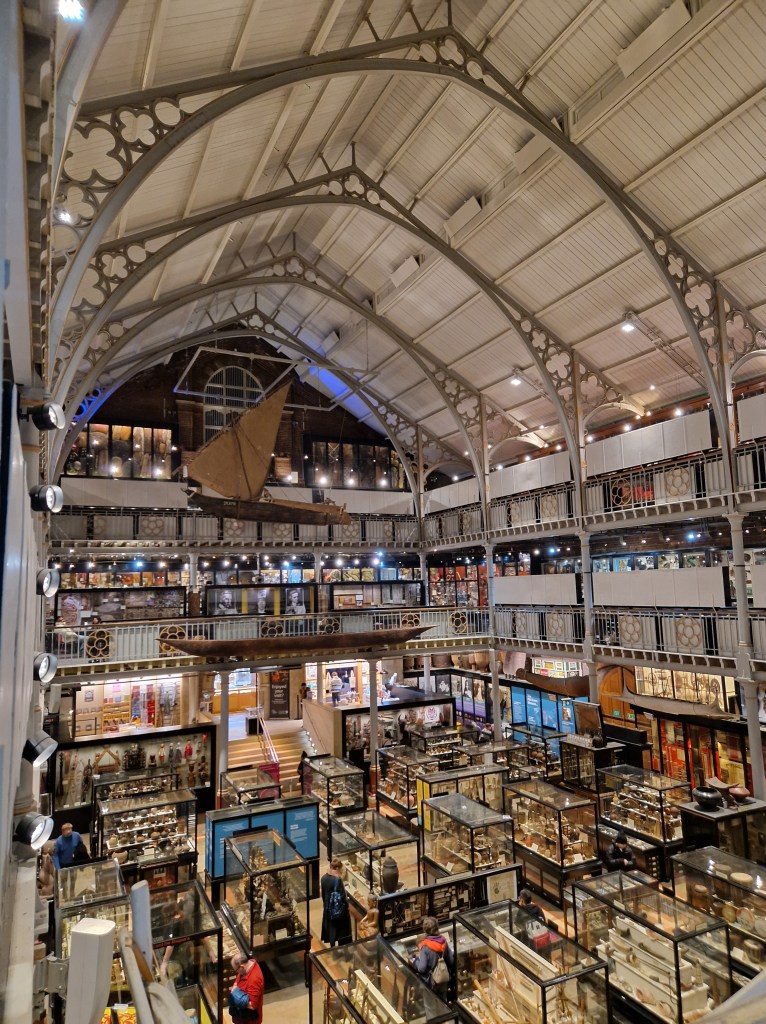
Accessed via an archway from the Natural History Museum, Pitt Rivers is an eclectic collection of, well, pretty much everything! Founded by Lieutenant General Augustus Henry Lane Fox Pitt Rivers in 1884, the museum houses his private collection, and has been added to significantly since his death. He began collecting guns during his time in the military, and then expanded his interests. In most museums, artefacts are organised by region or time period. At Pitt Rivers they are organised by type, so if you want to see a spear, you can see many of them, from all over the world, and all time periods, in one place. Parts of it are a little macabre, particularly the weapons, but interesting all the same. There used to be shrunken heads on display, but they are kept in the archives now, as it was felt that the way they were displayed didn’t lend itself to education about the practice, leading to a prejudiced view of Shuar culture.
Ashmolean Museum of Art and Archaeology
Past the Martyrs’ Memorial, and opposite The Randolph Hotel (one of Inspector Morse’s haunts, and a great spot for afternoon tea, although the interior is a bit wacky after the refurb) is the Ashmolean.
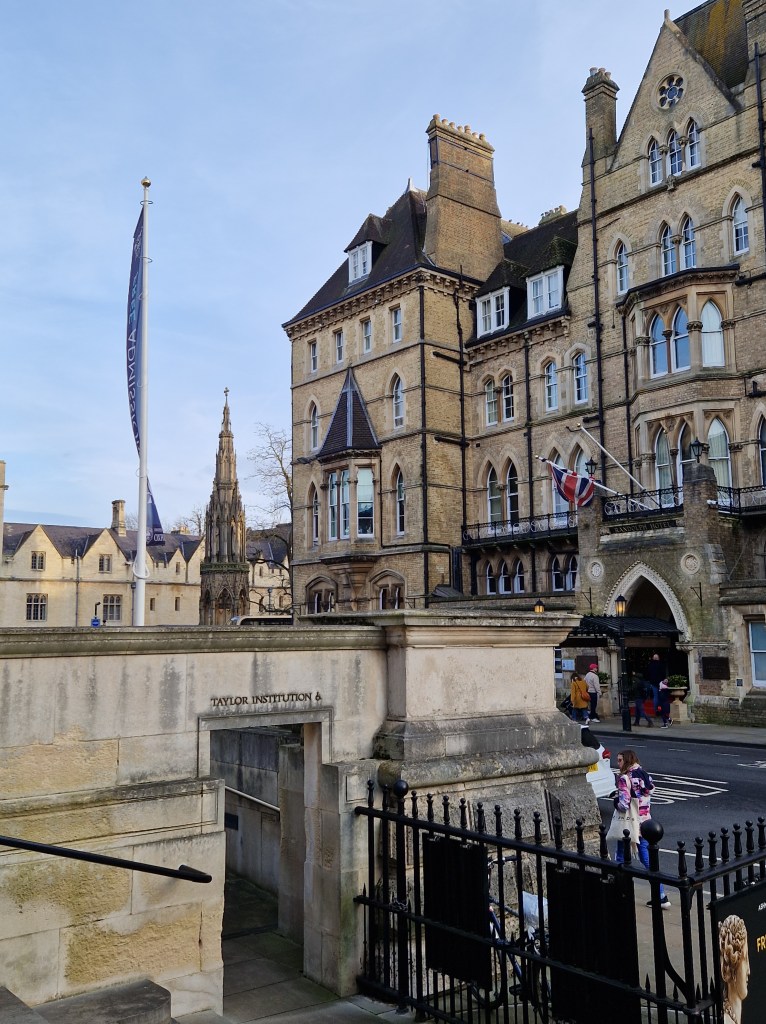
Recognised as the first modern museum in the world, it was founded in 1678 to house the collection of Elias Ashmole, and moved to the current location in 1845. It underwent an extensive refurbishment in recent times, reopening to the public in 2009. Across five floors, you’ll find works by artists including Picasso, Turner, Michelangelo, and da Vinci, Egyptian mummies, textiles, and the Arundel Marbles. They used to have a Dodo here too, but it fell to bits so they threw it away. During the Millennium fireworks, thieves used scaffolding on a neighbouring building to break in and steal a Cezanne. It is believed it was stolen to order, as it hasn’t been heard of since.
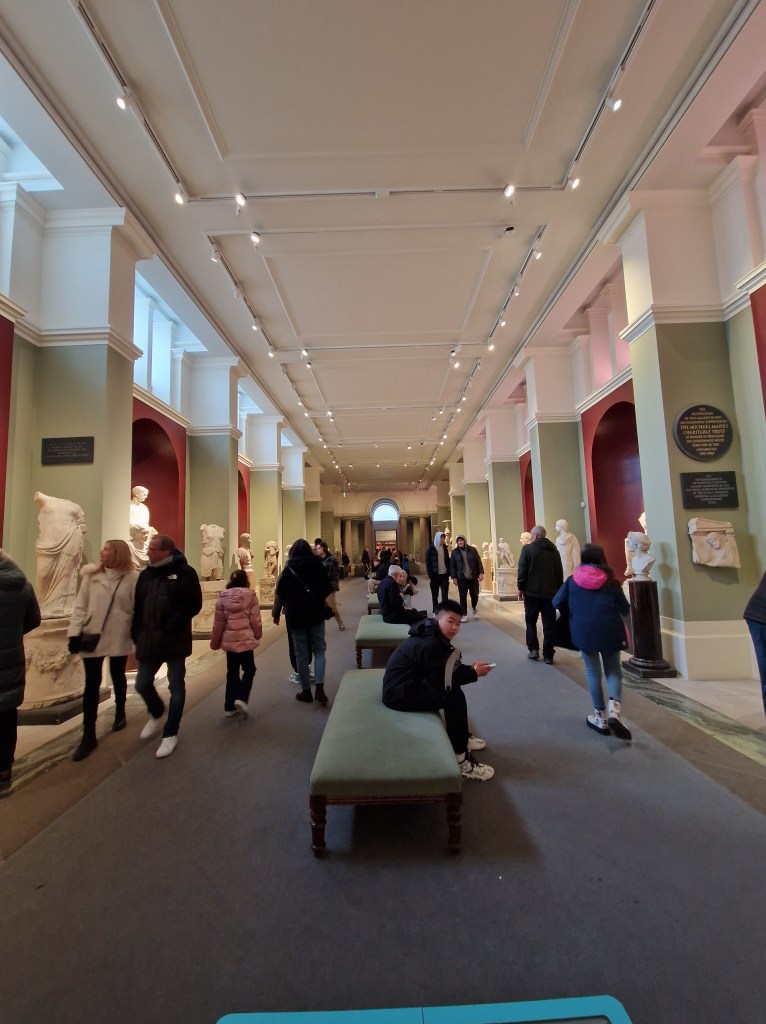
All of these museums are free to enter, although donations are welcomed. They are expensive to maintain and run, but you won’t be shamed for not donating, unlike other places I have been.
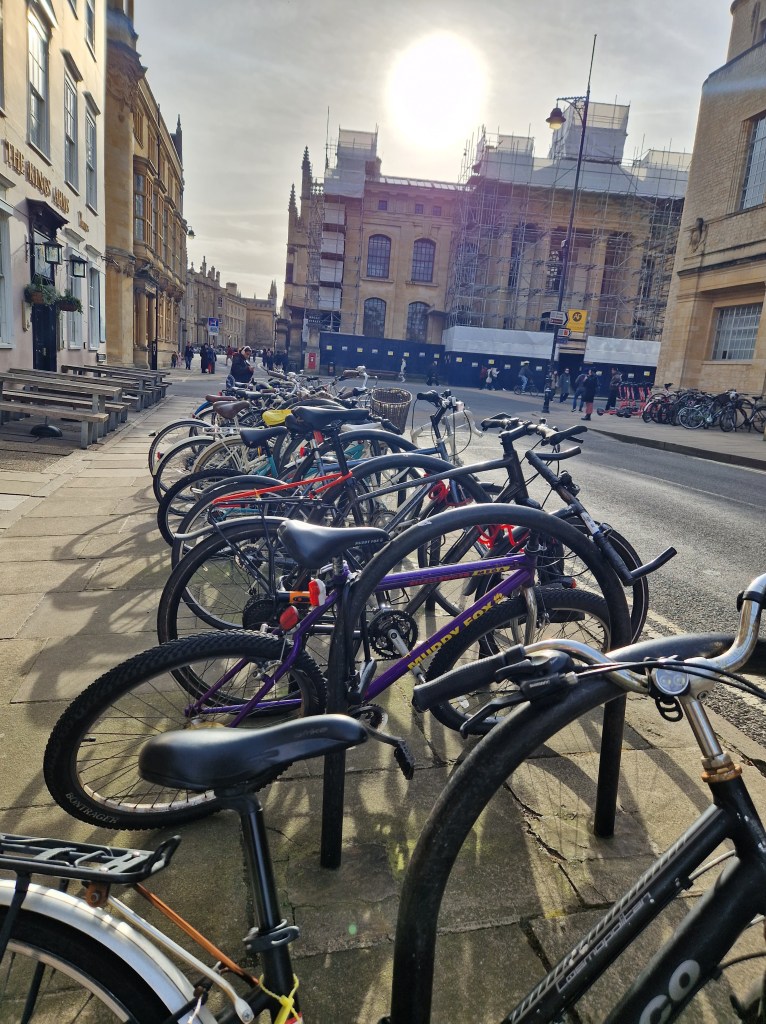
As you navigate your way around the streets of Oxford, keep your eyes open. The city is home to more than 26,000 students, many of whom use bikes as their primary mode of transport. It isn’t quite as congested as Amsterdam, but it’s definitely something to be aware of as you walk around.
There are of course many more things to see and do in Oxford. Walking tours, hop on hop off buses, tours of colleges and libraries, messing about on the river in a punt, and attractions like the Oxford Castle & Prison. However, all of these things come at a price, and I’ve tried to stick to free and low cost options, so they didn’t make the cut. I hope this shows that you can definitely get a good taste of Oxford on a budget.
 Jayne Loves Adventures
Leave a comment