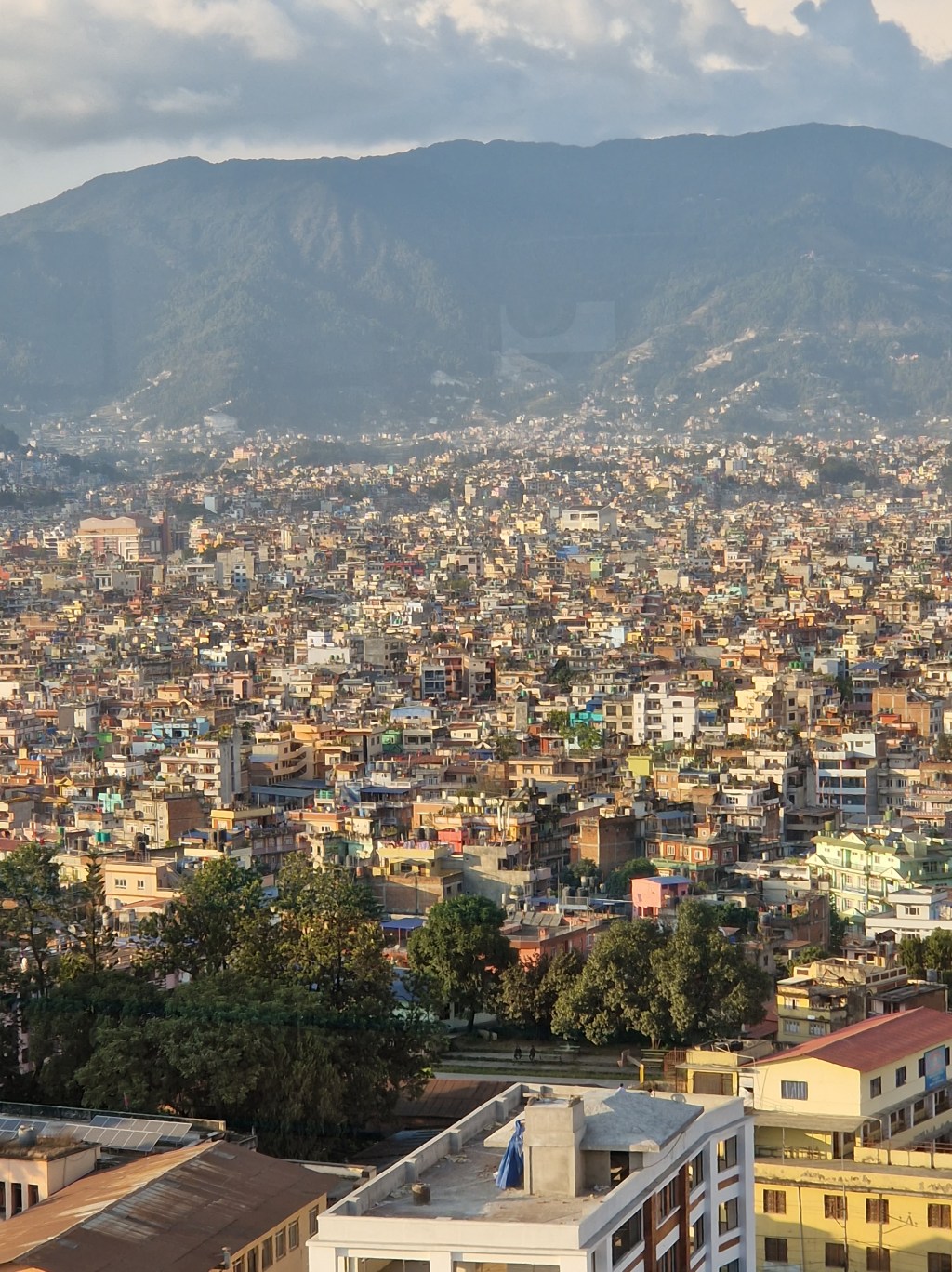

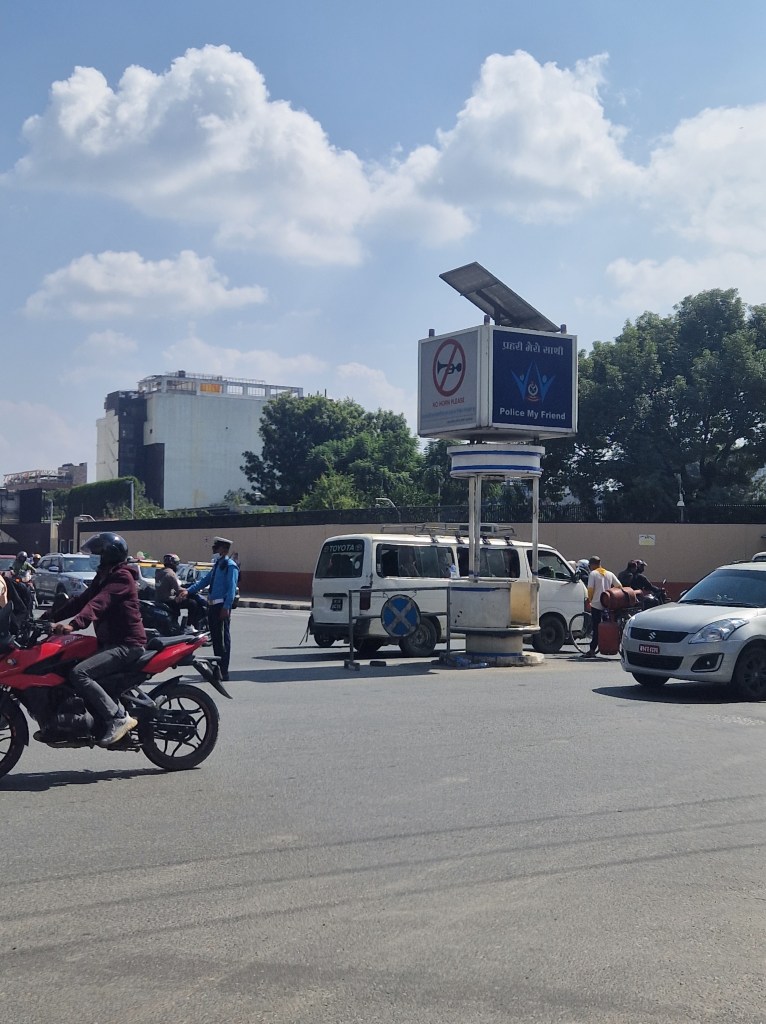
Kathmandu. Say it out loud. Doesn’t just hearing the name conjure up thoughts of exotic, far-flung places, completely foreign in all that they are, their sights, their sounds, their smells? It sparks daydreams of adventure and exploration, completely out of the comfort zone, all new and exciting. Peering out of the minibus window as it weaved and dodged its way through the traffic, I had a huge smile on my face. I love to experience new places, and seeing throngs of people moving along the pavements as if taken by the tide just made me eager to join them. Motorbikes, laden with their cargo of two, three, four people, dipped and darted between larger vehicles, occasionally wheeling around a pedestrian. A pedestal, like a pulpit, stood in the middle of each major junction, a traffic policeman directing operations from a few steps away, armed with a whistle. At one point, we passed someone on a motorbike who had been pulled over. We all wondered out loud what on earth you had to do to be pulled over, as there seemed to be little in the way of rules of the road. We made slow progress across the city to the hotel in Thamel, where I showered, unpacked a little, and changed. At that point, it felt like the best shower I’d ever had. That would change!

From the hotel room window, I couldn’t discern streets at all, just a jumble of buildings, some short in stature, but most taller, some very obviously earthquake-damaged, with parts that had been removed, beams or different tones of brickwork the only proof that the structure had once been more substantial. It was like gazing out on a landscape of Lego, where the creator had lost the instruction book, so they made it up as they went along, removing damaged parts and adding an extra storey here or there, as the need arose. A lived-in city rather than a sterile, designed one. Beyond the city, I could see mountains rising in the distance. I’d get to those soon enough. For now, it was time to jump into the chaos and get to know this enchanting place.

Founded in the 2nd Century, Kathmandu is one of the oldest continuously inhabited places in the world. It’s a very historical, spiritual place, with no less than seven UNESCO World Heritage Sites scattered across the valley (I’ll cover some of those in separate posts). More than 1.5 million people call Kathmandu home, with over 3 million in total living within the greater Kathmandu Valley area. I think I encountered most of those people the first time I crossed a major road! As I’ve already mentioned, it’s busy, but because of the huge number of vehicles, everything moves slowly, and you quickly learn to treat traffic as if it isn’t there. If you waited for a gap, you would wither and die of old age, right there on the pavement, before a gap came. It can be very unnerving to see the traffic bearing down on you, so it’s best not to look. Just cross, everything will go around you. There is no road rage, no ill-feeling, it’s just the way it works.
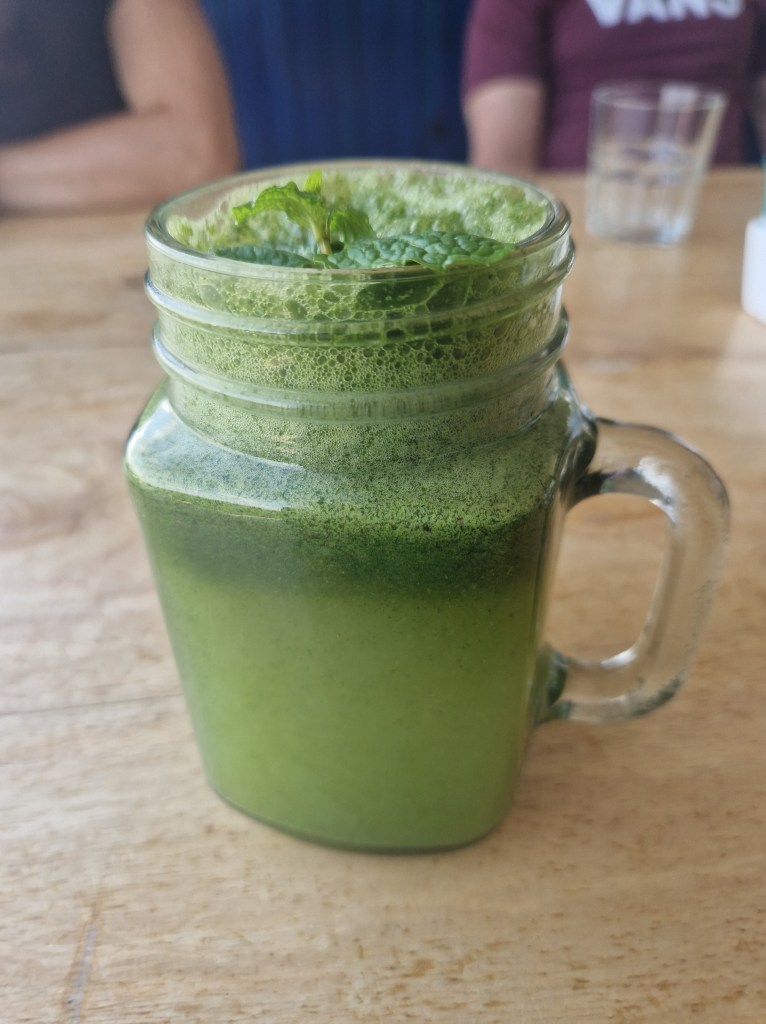
October in Kathmandu was pleasantly warm, hot compared to home, but not melty-hot. Manageable. The monsoon had lingered, and the weather had been a bit iffy, but the sun had finally put his hat on, and all was well in the world. I’ve found the quickest way to get to know an unfamiliar city is to get completely lost in it, and in Thamel, that’s pretty much guaranteed. The narrow streets, lined with shops that are separated from the passing traffic only by the gaping, yawning potholes all look the same at first. As you get your bearings, you begin to recognise the place that sells singing bowls, the shop next to it with maps that look decades old, yet still accurate, the chap inviting you in to look at the treasures he has on offer. On the next circuit, you spot a familiar t-shirt, proclaiming ‘Dal Bhat Power, 24 hour’. You’re getting the hang of it. Giving directions can sound a little crazy, “Right at the end of the road, past the yak bell shop, left at the massive pothole, and it’s just opposite the brown dog that’s sleeping on the step”. NEVER mention art shops in directions, there are just too many of them for it to be helpful, they are everywhere, the way you might encounter Starbucks elsewhere. Incidentally, the local version of that is Himalayan Java Coffee. Best cheesecake ever, but the mint lemonade will turn your teeth green.
Even on my first stroll through Thamel, I quickly realised that zipping up my suitcase in a few weeks would be a challenge. Pedestrians, motorbikes, cars, vans and dogs (there are always dogs) mingle in the same space. It can be tempting to walk in the middle of the road at first, to avoid the vendors plugging their wares, but it’s all very jovial, and all done with a smile, so not intimidating once you get used to it.
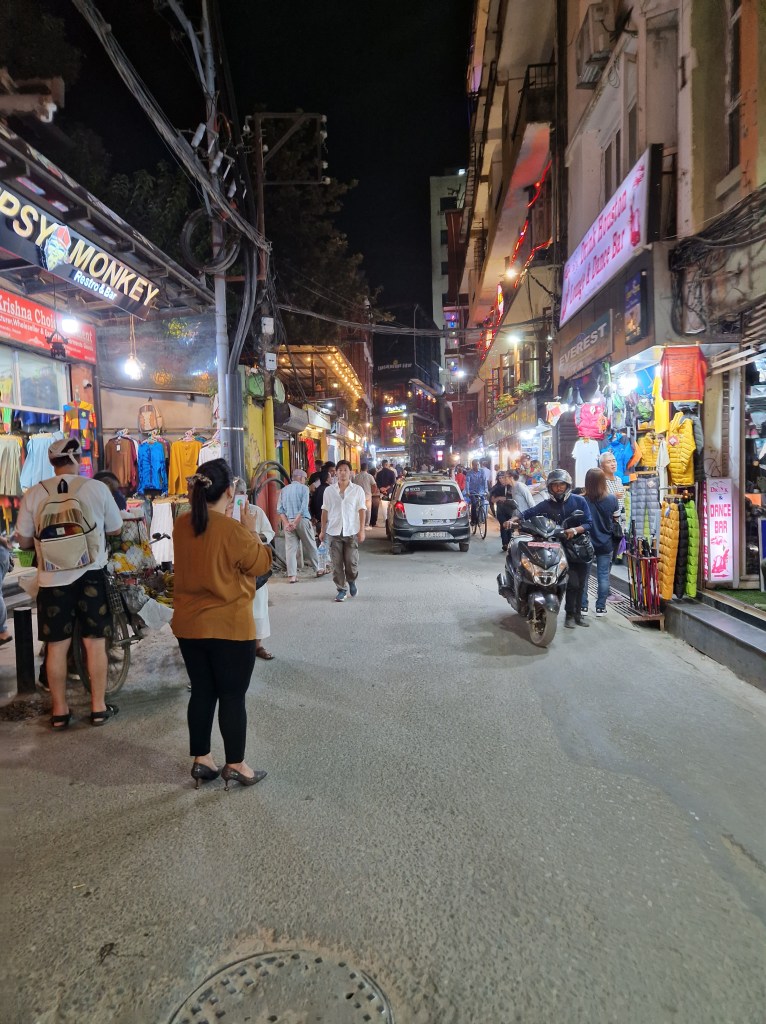
Haggling in these shops is commonplace. Some people really get into it (Chloe, I’m looking at you), and it can go on for ages before you realise you’re quibbling over the equivalent of 10p. The items you can buy here may be very cheap if you’re coming from a place with a stronger currency, but they are well made, it isn’t tat by any means.
Nepal has a closed currency, meaning it can’t be traded outside the country’s borders, so I had withdrawn rupees from a cash machine outside the hotel. The notes are fabulous, brightly coloured, with various animals on them. I didn’t change the bit of money I had left when I returned home, opting to keep it as a souvenir instead.
There is a wide array of food available in this part of the city. Bakeries sit shoulder to shoulder with small kiosks selling momos, takeaways are as plentiful as art shops, and motorbikes equipped with insulated carriers, emblazoned with Foodmandu are a common sight. The smell of food is constant, it just differs slightly, depending on what’s on offer in the place you’re walking past. Our tastebuds awoken, we found a restaurant/bar tucked away down a small alley, and sat at a table on the terrace. The menu had local options, but also more familiar foods. We opted for burgers. While we were keen to try the local food, we’d had a very long journey, and eating something familiar seemed like a sensible idea. Nobody needs a night in the loo after flying through the previous night. I remembered to ask for my drink without ice for the same reason. The burgers were incredible. Mid-meal, members of staff came out and lit candles. Moments later, the lights all went out. How did they know that was about to happen? After a minute or two, our lights came back on, but the opposite side of the street remained in darkness. After a few minutes, theirs went on and ours went out. Nobody batted an eyelid. Power cuts are common and expected. Not a surprise when you see the poles holding tangles of cables that look like birds nests.

On one occasion, we saw some men working on these cables beside a main road. Their ladder plonked right in the road. They had a box open and seemed to be guessing which cable they needed to unplug. We gave them a very wide berth.
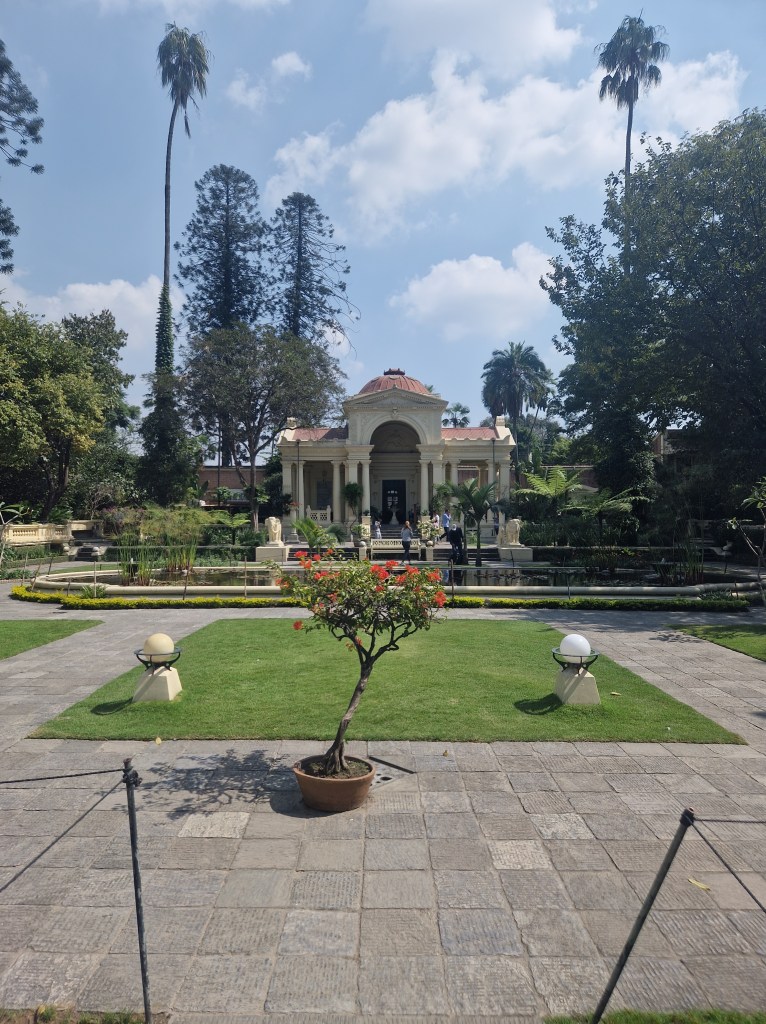
Within the chaos, there are pockets of peace. We visited the Garden Of Dreams, just a little way from our hotel. This little oasis of calm, tucked away behind a wall, feels like a breath of fresh air. You can sit beside a hand-tended lawn, listening to the splash of the water features and watching chipmunks run along the coiled branches of wisteria, while on the other side of the wall, motorbikes choke up the air with fumes.
Speaking of fumes, there is no denying that Kathmandu has problems with air quality. As a rule, the air quality exceeds the guidelines set out by the World Health Organisation by 7 to 10 times. As I write this, the level is 8 times higher than the accepted level and is deemed ‘Unhealthy For Sensitive Groups’. If you have any respiratory issues, be prepared. Pack a buff or a mask to cover your mouth and nose. The pollution varies across the city, in some areas, mostly along the main roads, it can be quite unpleasant, but away from these it’s not as bad. I have asthma but didn’t find it too much of a problem, but I was careful not to spend too much time outdoors in areas where there was heavy traffic.

As I mentioned earlier, Kathmandu is of huge historic and cultural significance, and we were there during Dashain, a major Hindu festival, so there were various events happening, and traffic was busy throughout the night as people gathered together to celebrate. We saw many people with tika on their foreheads, a bright mark made by a mixture of rice, yoghurt, and pigment, dabbed on during a blessing. I wish we had been able to experience more of this festival, but the mountains were calling, and we had to go.
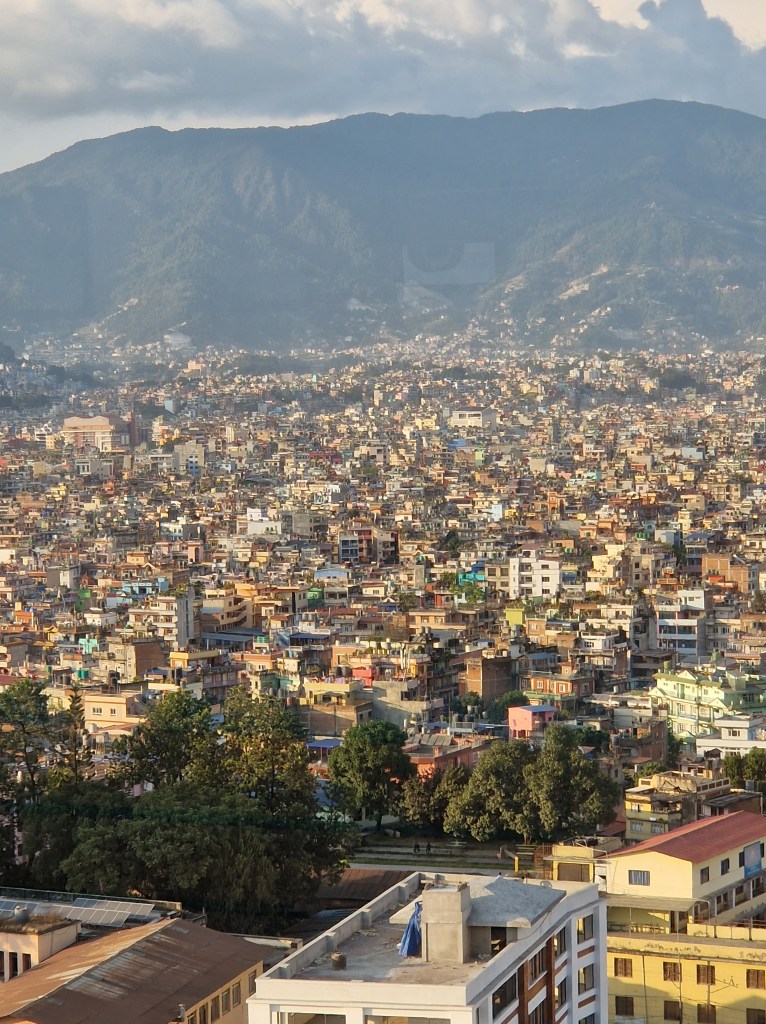
Kathmandu is an intriguing city, full of contrasts, from the traditional temples and religious practices, sacred rivers and historic buildings, to the twirling instagrammers in the Garden Of Dreams and hordes of people dancing at rock bars like Purple Haze. It’s a very welcoming place, the people are so friendly, and it’s hard to leave. I’m sure I’ll be back one day.
 Jayne Loves Adventures
Leave a comment